This is roughly the point in my endeavor to catalog every episode of Bump in the Night where I realize I’ve made a terrible mistake and should have left it as a one-off article highlighting only the most interesting stuff. The show is watchable, but that’s the best I can say about it. Now, I’ll watch an old El Santo film and love it to death for how hammy and stupid it gets, but Bump in the Night usually falters by being mediocre. There aren’t stretches of absolute agony and pain, so forcing myself to scour through an episode to decompose what it is doesn’t feel cathartic. Instead, it just makes me realize that the main advantage Mr. Bumpy had in his time was that something else would be on soon, and his show was so forgettable, it wasn’t going to linger on my mind to develop an adverse reaction.
But oh, as soon as I make it a job, now it’s lingering.
Hide and Go Freak
I once saw someone talk about the writing process for a film at Dreamworks. They had a strategy where two characters who were supposed to be friends would have some kind of esoteric game they played together, to create the sense of a very long and complex relationship in just a few minutes of screen time. You can’t just have two kids playing video games together – one of them has to chug a slurpy when they lose, and if the kid gets brain freeze, the winner is entitled to punch the loser on the arm. I remember when I read about this, it got ragged on somewhat because the company had a formula for simulating a process that should be organic. Personally, I think it’s kind of clever, and the risk is just that the studio needed to take care to not overuse the formula, lest the audience notice it and start thinking about it too much to enjoy the scene.
Hide and Go Freak is a similar concept as an episode. It turns out that Bumpy and Squishy have developed their own game that only makes sense to them. The way it works is, first they hide from each other, and then they have to find one another again, but when they do they make ugly faces that might be scary.
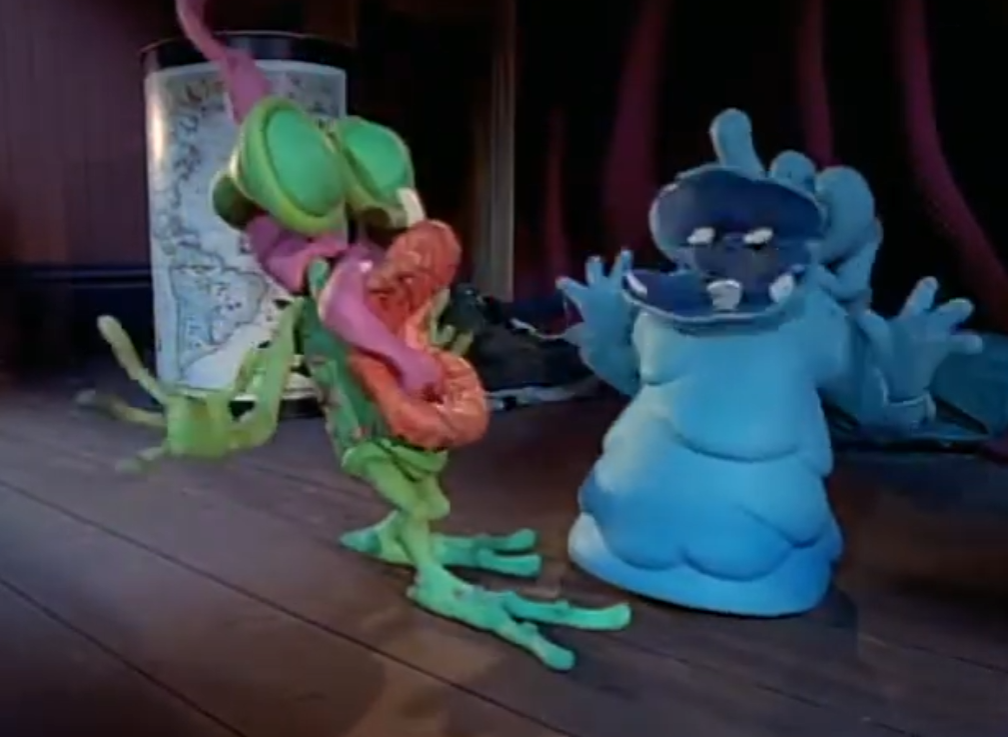
I don’t know why they have to hide from each other first. If I were to take this seriously as something that happened naturally in a living, breathing world, then it might be possible it started off as a game of hide and go seek where one of them made a scary face when they got found, to punish the seeker for doing a good job. The reaction was so funny that they just kept doing it, until the main thrust of the original game got forgotten and now all they do is make horrible faces.
That’s if I could bring my soul to allow itself to be actually immersed in Mr. Bumpy’s world. As it is, though, I can’t hardly imagine Bumpy being able to do a game like this and not take it way too far at some point. If you kept playing hide and go freak long enough, sooner or later he’s going to regurgitate his organs on you like a sea snail, and now it’s not a game. Rather, what I expect is that whoever wrote this episode had to come up with a concept in a hurry, changed “seek” to “freak” without really knowing what that meant, and then pounded out a script working backwards from there.
After establishing the game as a thing, Bumpy announces it would be a great idea to involve Molly, and the fact that she doesn’t have any organs to regurgitate is sort of the conflict of the episode.
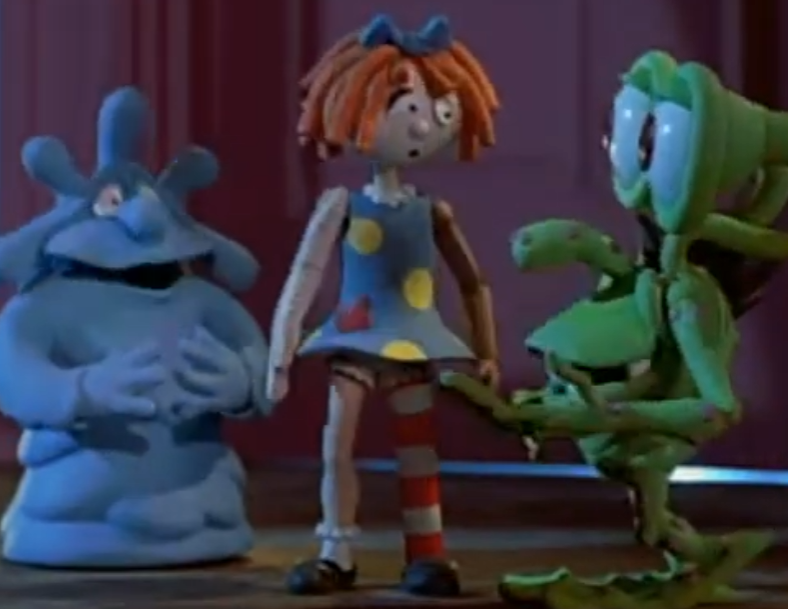
Molly flat out tells them that she’s a doll, so it’s both physiologically impossible for her to play, and also that she doesn’t have the personality to enjoy it, but you can’t reason with Mr. Bumpy and he won’t take no for an answer. He and Squishy convince Molly that they can help her become scary and play the game well, so for reasons that are completely beyond me after everything that’s happened in every episode so far, she trusts him.
Molly is immediately and once again proved a goddamned idiot for this.
They sit her down, smear stuff all over her face so she can’t see, and when they tell her to open her eyes, they jump scare her because the entire thing was a cruel ruse with zero purpose.
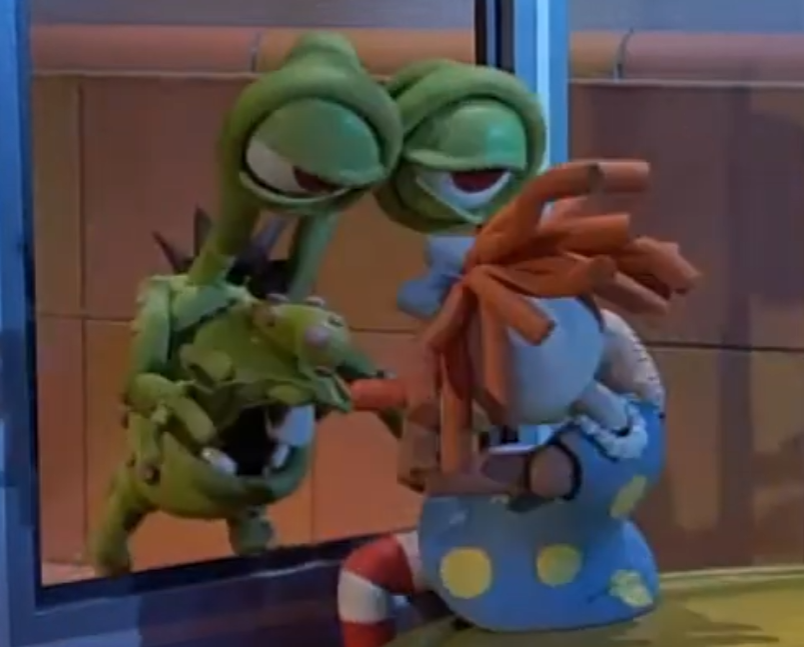
It’s strange, because you’d think an episode like this would be trying to teach kids that not everyone is cut out for your weird, insular game of Calvinball. Or, like, you have to teach your friends how to play it, because none of the rules are intuitive. Or something.
Not Bump in the Night. The moral of every episode of Bump in the Night is “Do NOT Trust Mr. Bumpy”. He doesn’t consistently fail you according to one major flaw, but rather in a myriad of different ways that are unique to every occasion. It’s the worst kind of untrustworthiness – unpredictable wretchedness. You can never mitigate it, because how would you know he’s going to eat your medical books? If he says he’s going to help you play a game he likes, why would he immediately trick you and make you not want to play? If you trust him with a snail, you think he might eat the snail, but instead he tries to kidnap it and be its mother. How will he let you down? You know he will, you just don’t ever know the way.
So understandably, Molly is done. She said she didn’t understand the game, and then Bumpy’s opening move was to betray her and laugh at her for it. But then they beg.
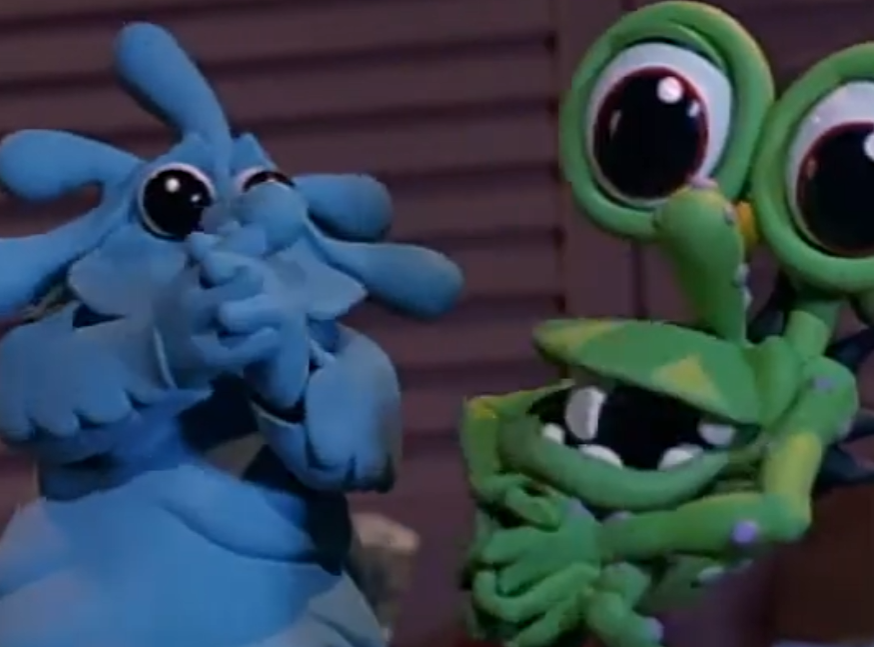
So she agrees to try again. They don’t really explain anything that well and Molly barely knows what’s going on, but after they separate, Bumpy catches up to Squishy and tells him he has a “really good idea.”
Then they work together to traumatize Molly by making it seem like Squishy is being mauled and eaten by a monster.
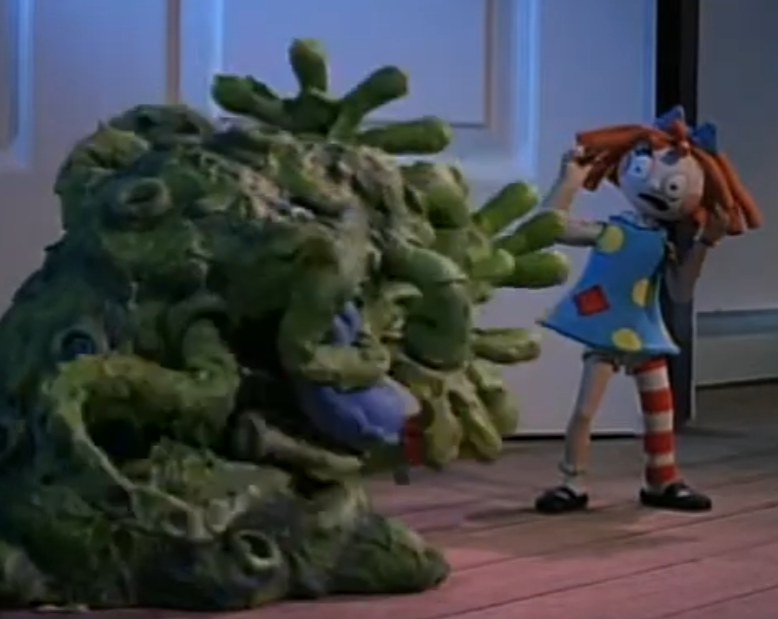
I was a child once, and I can tell you that in real life, whenever kids single each other out like this, it doesn’t end in laughs and a cheerful understanding of everyone’s antics. If this were real life, once Molly realized she’d yet again been taken advantage of, she’d tell Bumpy to go straight to little, green, bitch hell where he belongs, and she’d go home. Bumpy would be lucky if he could get her to join in any more games for the rest of the week at least, and the only reason kids rejoin a group after chicanery like this is because kids are stupid. But this is a cartoon, and Molly can’t be allowed to see the basic patterns that are happening with Bumpy, and nor can she just quit because that’s the coldest and least fun way to handle a conflict. It would send a clear message and articulate that playing like a bastard will result in the end of play for the day, but no kid’s show ever ends the episode by just having a person leave with the hanging threat they might not return.
Instead, Molly pretends she was so frightened that it froze her, and she can no longer move. Once again, in real life, this would resolve differently. I was in Boy Scouts and know what it means to be surrounded by unsupervised children your own age. The mannequin game is not how you get one over on the group. All that’ll happen is they’ll pick you up by your underwear and carry you home via atomic wedgie, and then you can’t even go home out of anger because that’s where they left you. I have seen it.
Of course, for our cartoon, it totally works. Bumpy is utterly fooled, falls into despair, and then Molly laughs at him for being so stupid. That way they’re even and the relationship of these characters doesn’t feel quite so one-sided.
Episode over.
Better Homes & Garbage
This is the episode where it’s revealed that Bumpy and Squishy have nothing in common and they should kill themselves. Sorry – that’s the over-analysis speaking. What I meant to say is that they shouldn’t be friends. It’s also the first episode where a live action human shows up.
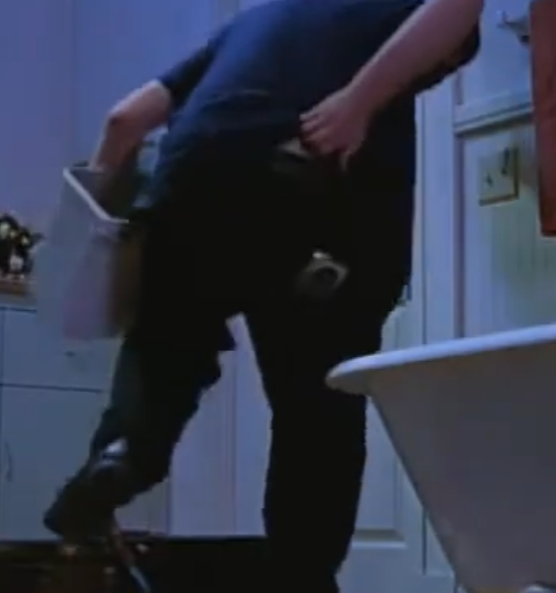
The fact they have a full-sized human wandering around makes me wonder how they did sets in this show, because although this is the first time we see it according to the way the episodes were ordered by the network, it’s not the last time we’ll see a live human. In fact, it seems like they were originally going to have a lot more live humans interacting with the world to start with, because the pilot episode – which we’ll get to a little later – had numerous live action scenes. Was this a movie set home, and they did their claymation on a human-sized stage? It could be interesting if you imagine they didn’t build the set for Bumpy to start with, but repurposed it for the show after filming something else.
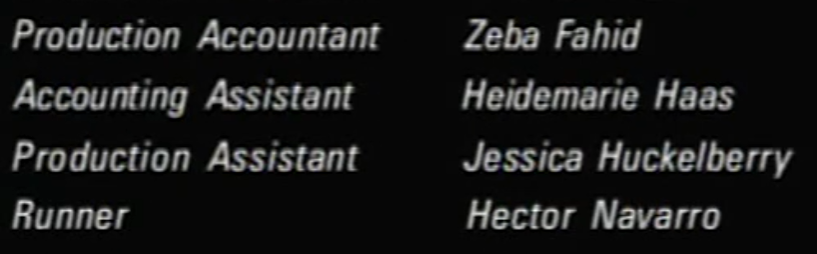
I thought maybe I’d be able to find some information about the production of the show, but unsurprisingly, there’s not a whole lot out there. I was able to find info about some of the voice actors or even the kids that appear later, and Elon Musk’s brilliant AI, Grok, apparently created its own misinformation Wikipedia that tried to convince me one of the kids was now a judge in Fulton County (he’s not), but I couldn’t find any information about who they got to be the plumber. I checked the credits, and all I’ve learned is that Hector Navarro got away.
Can I honestly just take a minute to say that I’m so glad that LLMs are now creating wiki pages and that those pages appear in the top search results for obscure questions, and also the information is wrong. It’s like the future is really here, guys. I’m so glad our tax money is going to this and not, you know, all the other things it could go to.

Anyway, in this episode the bathroom is getting remodeled, so Squishy has to stay with Mr. Bumpy for a while and it turns out that when they’re not torturing Molly, they hate each other. Squishy cleans Bumpy’s home and he hates it. He gives Bumpy a carrot and he hates it.
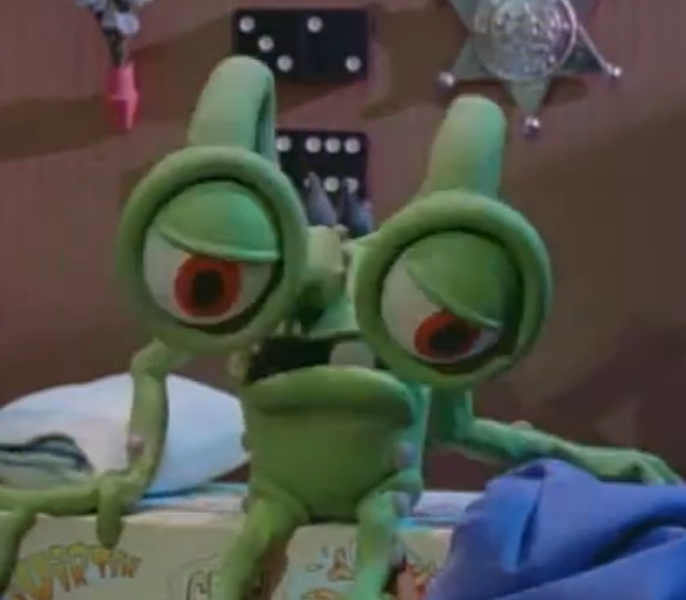
And that’s really it. I’ve got very little to say about this whole episode, because if you watched any cartoons in the nineties at all, I think they all did this episode, and Bump in the Night plays it completely straight. The only thing that really sets it apart is that it comes across mainly as Bumpy being ungrateful to Squishy for cleaning his home, but on the other hand he didn’t really ask for that and his natural habitat is obviously filth. The point is clear and doesn’t require elaboration, but it drags on.
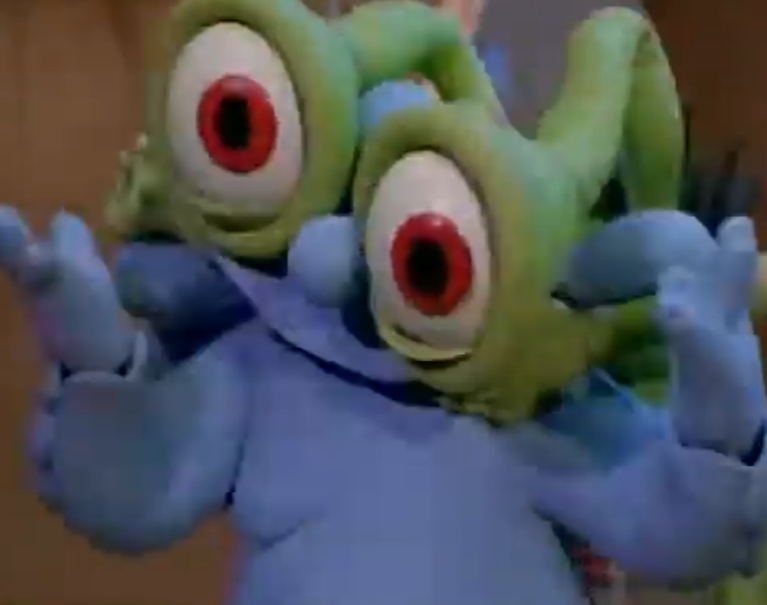
In the end they say, “Oh, I realize now we can still be friends even though we’re different people,” and a big sign that says “moral alert” falls from the sky onto Bumpy’s head. And you know…
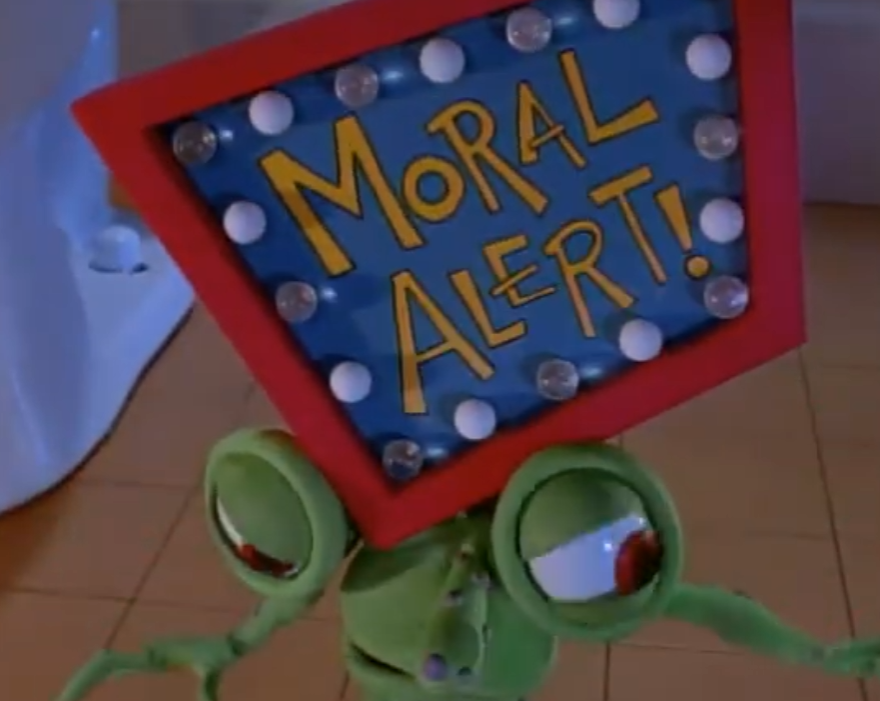
If you really cared about a show, I don’t think you could be content to write an episode that didn’t need to be made and then try to lampshade it by breaking the fourth wall. “Ha ha. You in the audience will recognize we didn’t do a great job!”
This doesn’t excuse a boring premise, Bump in the Night. This just means you knew it kinda sucked, but you didn’t want to come up with other script ideas. You have to earn fourth wall comedy. The idea behind it is based on a play performance, where you imagine an actor on stage turns to the audience and talks directly at them to get them hyped up and “in on the joke”. In fact, the reason why this happened so often and worked so well in Looney Tunes in its time was because a lot of Looney Tunes gags were lifted directly from old, Italian plays.
Breaking the fourth wall doesn’t mean putting on a sub-par performance and then you get to wink at the camera to erase all your culpability for that. You have to imagine you’re on stage, and you have to turn to another human sitting in a seat below you. You look at that guy, give him a little nod and a wink, and if he isn’t already having a good time, oh god. At a minimum, it’s going to be a blow to the actor to see their show isn’t fun, and at worst, they’re seeing the audience pull spoiled fruit out of their sleeves. Breaking the fourth wall when you suck means inviting the audience to react, and you shouldn’t expect a happy time when the obvious reaction is to bury you in an avalanche of produce.
Do you ever wonder why it feels especially bad when a lousy TV show breaks the fourth wall? Well that’s why. It’s because they’ve invited you to react as an audience member, and you can’t. You can’t heckle them, you can’t throw fruit, you can’t flip them the bird in a way that’ll register to the person on stage. If your reaction is to laugh, then everything is fine, but if the show’s a complete hack job and it evaporates that barrier, leaving you incapable of a meaningful “boo” is just plainly criminal.
Good fourth wall comedy can elevate a performance. It helps the audience feel like it’s for them especially. For example, Avenue Q has a bit where they pass a hat around to collect money from the audience, and when they get the hat back, they joke that somebody left their bus pass or something in the hat, and one of the actors will say they’re keeping it. Nobody actually left their bus pass in the hat – they do this for every performance – but the point is to make you feel like you have a bit of special involvement in the show. Sometimes it is real because you never know with live performances, but you have to plan it for a scripted show, and when you’re planning it, a good bit is akin to “hey, you guys have been a great audience, you’re funny too, and we’re all having fun”. What Bump in the Night is doing is more along the lines of telling the audience “no refunds”.
And goodness, it wasn’t a lot of time, but I’ll never get it refunded. If you’d like to continue to have your own time spent, and if the next article is ready, you can click on the link below!
Click here for Part 5.